


Elizabeth Le Blond, the explorer after whom Lizzie is named
Lizzie is named after a real-life woman: Elizabeth Le Blond, a photographer, traveler, and mountaineer of Irish descent. It was her passion for exploration and her way of engaging with the world that inspired the name—and, above all, the spirit—of our hotel, nestled at the foot of the Chamonix glaciers.
A building dating back to the Belle Époque
It all starts with a building: a Haussmann-inspired facade, orderly and elegant, a legacy of the Belle Époque, standing at the foot of the glaciers of Chamonix. At the end of the 19th century, the railroad brought the Alps closer to the major European capitals. A cosmopolitan clientele then discovered the valley, captivated by its landscapes and the spirit of adventure that reigned there. Among them were many Britons who contributed to the rise of modern mountaineering and brought with them their love of travel, their tales of exploration, and the exuberant elegance we associate today with the Victorian era.
As I explored the connection between this architecture, this era, and this pioneering spirit, one name stood out: Elizabeth Le Blond.
Born Elizabeth Hawkins-Whitshed in Ireland in 1860, she is now recognized as one of the pioneers of mountaineering and mountain photography. She completed more than 100 documented first ascents during her lifetime, including two complete ascents of Mont Blanc, and climbed in Switzerland for about 20 years before scaling 33 mountains in Lapland and Norway, with 27 first ascents to her credit. She is also considered a pioneer of “manless climbing”—climbing without a male guide—at a time when this practice was still exceptional for a woman.
As a photographer, she developed and printed her own negatives, with approximately 400 photographs published, and made at least ten mountain films beginning in 1881 in the Engadine Valley, making her one of the very first female filmmakers of her time. Awarded the French Legion of Honor in 1933, she died in 1934.
She didn't follow the beaten path. She blazed her own trail.
Lizzie has set a clear vision for herself: to be the go-to destination in Chamonix for those seeking more than just an ordinary hotel—a vibrant place steeped in history, where every stay becomes an experience and every detail an invitation to travel back in time. Her mission is to breathe new life into the architectural and cultural heritage of the Alpine Belle Époque through a cohesive and memorable hotel experience—from the choice of interior design to the personal touch.
The promise that follows can be summed up in one sentence: choosing Lizzie means choosing architecture with a memory. It’s a promise that speaks to both the eye and the mind, since Lizzie doesn’t sell hotel stays, but rather an immersion in an era, an atmosphere, and a story.

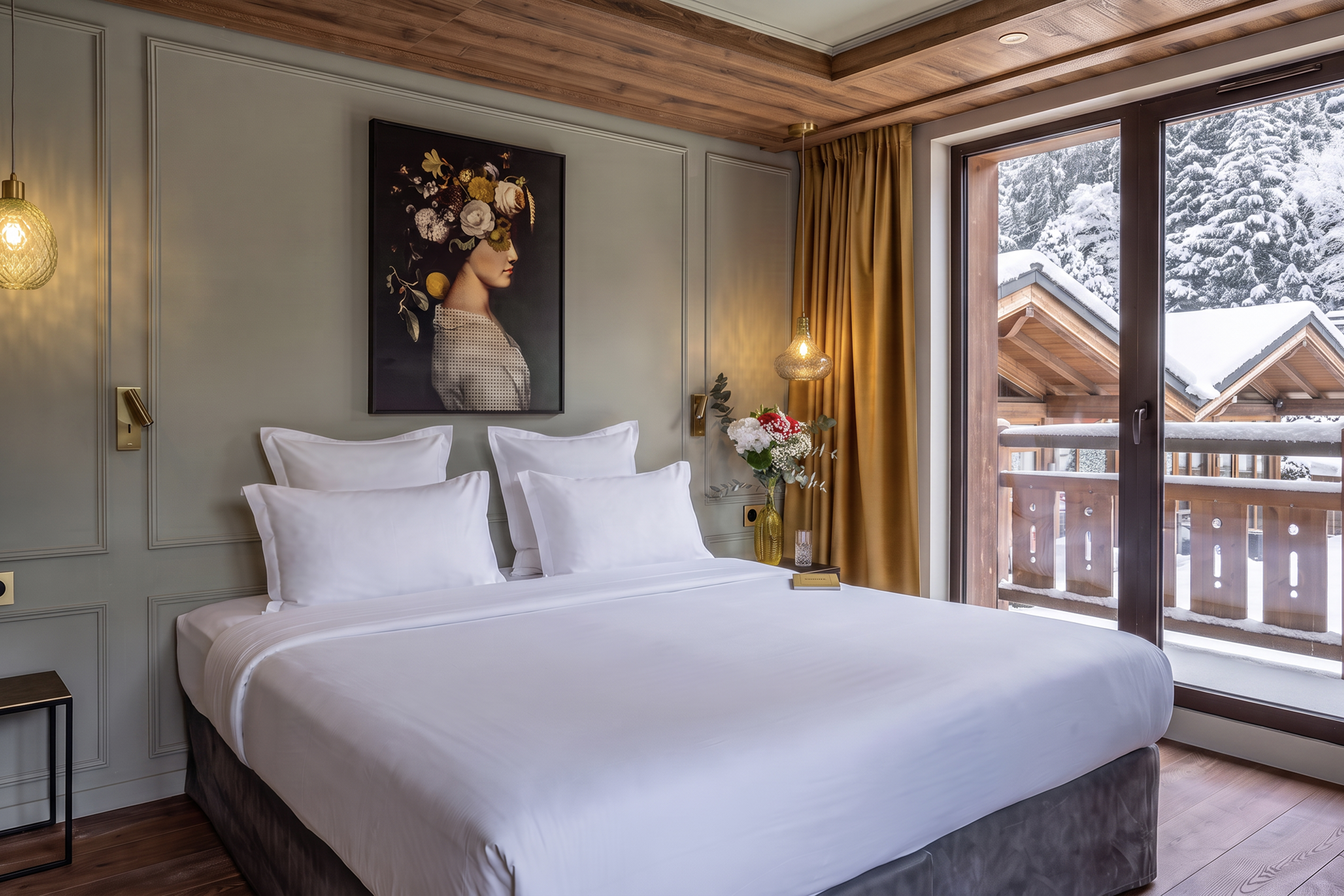
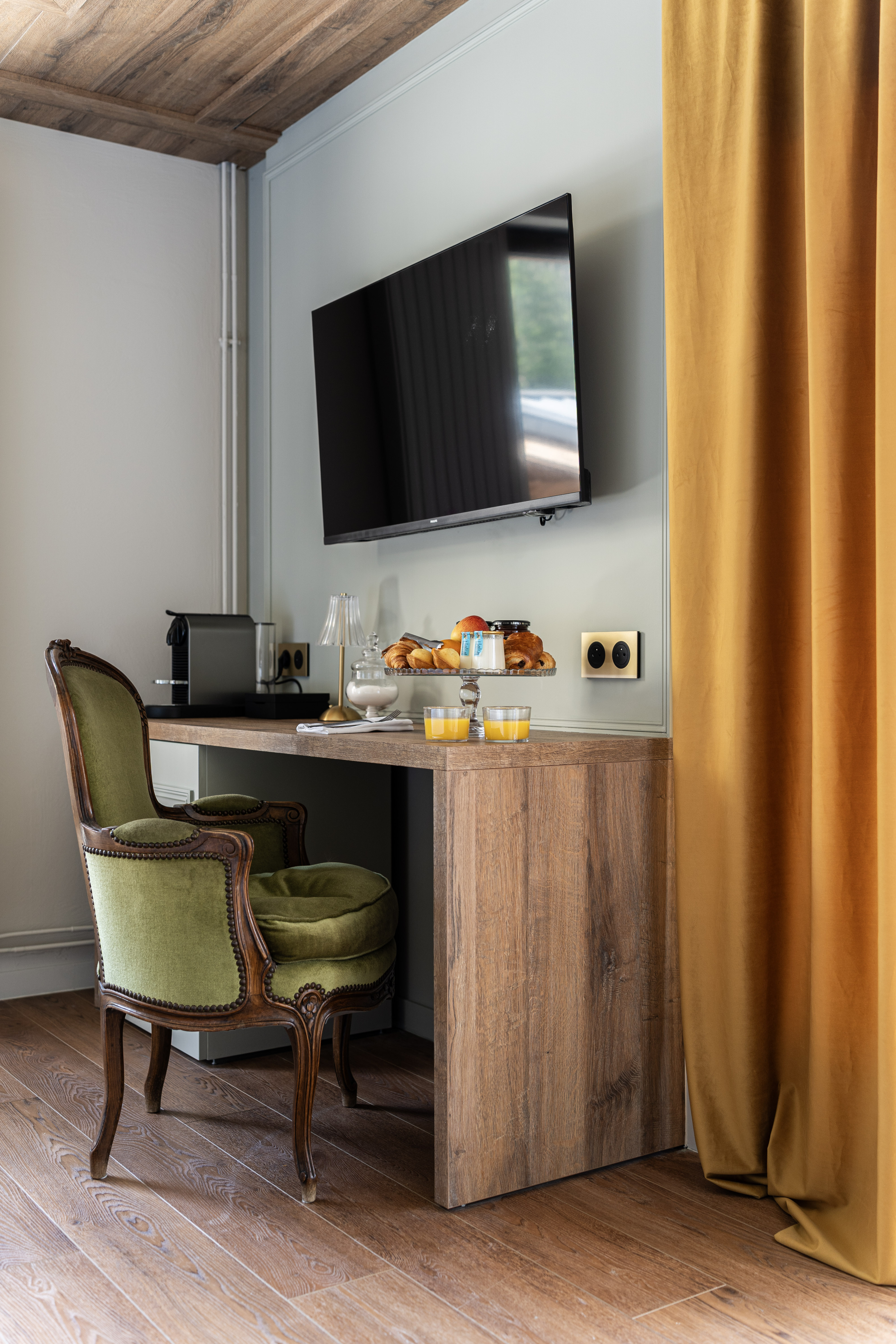
Lizzie takes its name from Elizabeth Le Blond, but above all, it embodies what her name represents: a love of exploration, an elegance that doesn’t seek to impress, a constant curiosity, and the courage to follow through on her convictions. This spirit now guides every renovation decision, every design detail, and every experience offered at the hotel.
Lizzie isn't trying to recreate the Belle Époque. Lizzie is trying to bring its energy back to life.
Exploring One's Heritage
Explore Lizzie's Rooms
A photographer, traveler, and mountaineer of Irish descent, born in 1860, known for her numerous first ascents and her pioneering work in photography and mountain film.
The facility is named after Elizabeth Le Blond, a name chosen to embody the spirit of exploration, curiosity, and daring of this 19th-century mountaineering pioneer.
She documented more than 100 first ascents during her lifetime, including two complete ascents of Mont Blanc.
Yes: she developed her own negatives, had about 400 photographs published, and made at least ten mountain films starting in 1881, making her one of the very first female filmmakers.
No: the hotel does not seek to recreate that era, but rather to bring its energy and pioneering spirit to life through its architecture and atmosphere.
When you choose Lizzie, you're choosing architecture steeped in history: an immersion in a bygone era and atmosphere, rather than just a hotel stay.